The Study of Skiing (or how I feel about prizes, bribes and grades)
January 27, 2014
Last post of The Adventure of Learning series.
I did something last week for the first time. I skinned up the ski hill and skied down, all by myself.
It doesn't sound like much, but I'll explain why for me it was significant.
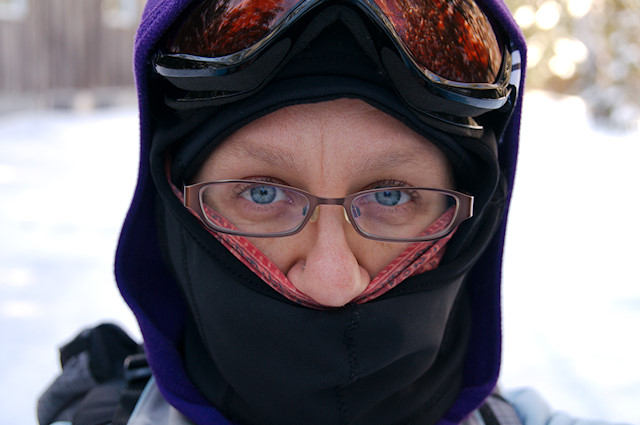
Two winters ago, was my first season on telemark equipment. I didn't learn to telemark though, not even close. I mostly cross country skied in the fields and woods around our chalet.
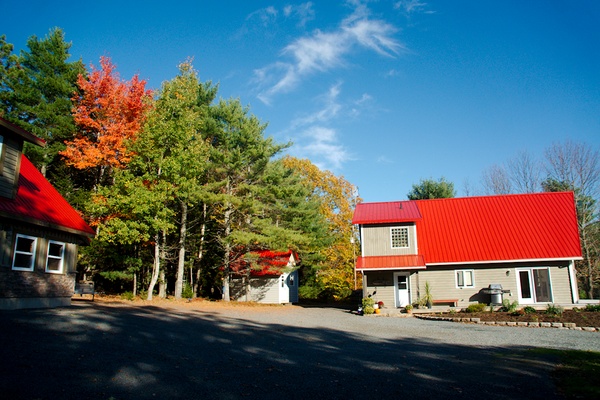
Remember that little cabin? Good memories.
Last year was our first winter in this home (this is our last). Living at the ski hill we decided to take full advantage of the opportunity and buy a family seasons ski pass. Our goal was to practice skiing as much as we could in the groomed terrain and then apply that skill to the backcountry. Backcountry skiing is a very rewarding activity (we prefer it to ski hills) but it's physically challenging and it's hard to learn the basic skills while dodging trees.
Two years ago I started with skis that worked well for backcountry rolling terrain. They were usable for downhill but more difficult to maneuver. Last March, we took advantage of an end of season sale and switched me to a more downhill friendly ski. These babies.
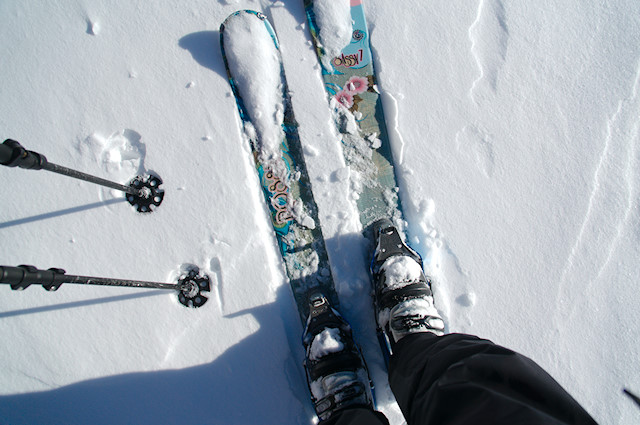
Months of practicing last winter, a few telemark lessons, and then an upgrade in my equipment (first the skis and then full-length skins in December) has yielded a marked improvement in my technique. And as my technique (in other words, my ability to get down the hill without "falling down the hill") has improved so has my confidence in my abilities.
Before this week I had never gone up and skied down a mountain alone.
Maybe it's the extrovert in me. I like doing physical activity with other people. Maybe it's the fact that I broke my leg alpine skiing as a child on a run I felt scared to ski, while my family had all skied ahead of me.
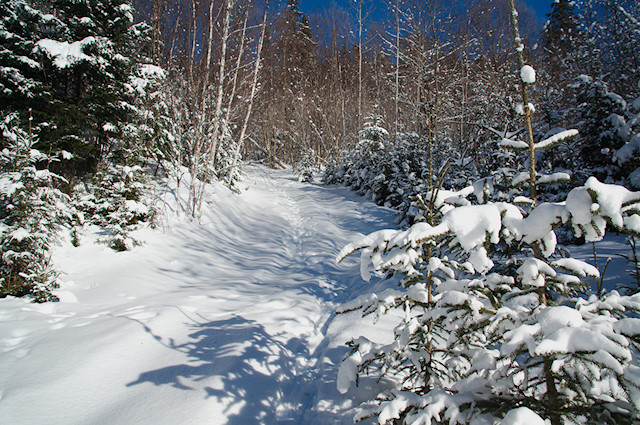
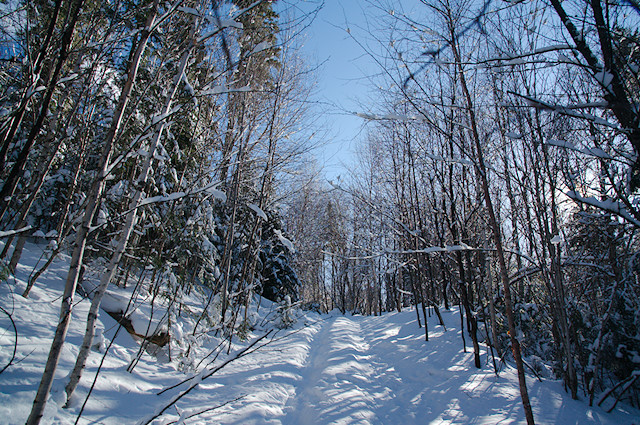
I don't know why exactly but I felt a first a wee bit nervous skinning up alone for the first time. The nerves subsided as I climbed higher and higher and my confidence grew. I felt so physically strong. I felt clear headed listening to the wind and the sound of my breathing as I huffed up the mountain.
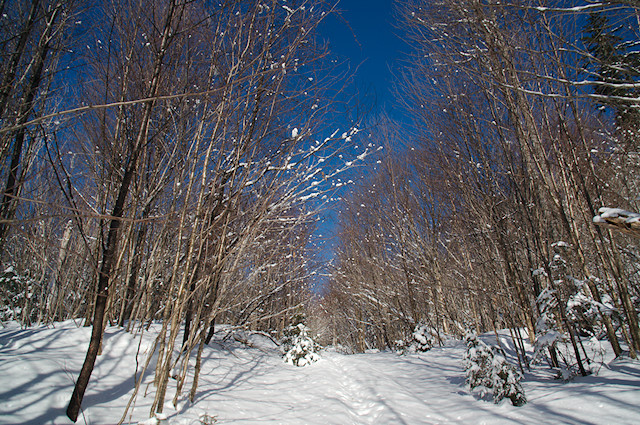
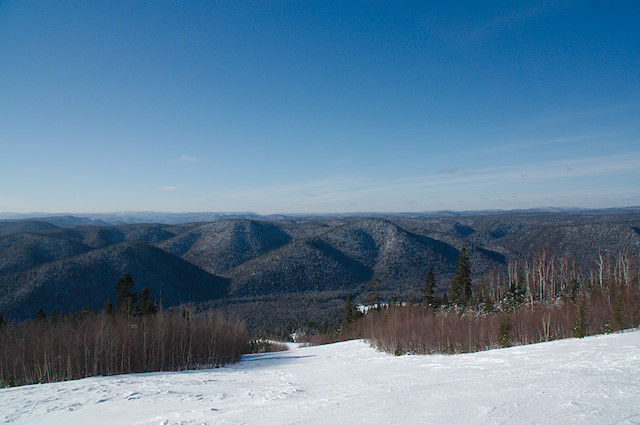
That first ski down alone was glorious. The snow was perfect and it was like floating down, with minimal effort. After all the sore muscles of last winter, pushing myself physically beyond what I normally do, after the embarrassment I felt as the "beginner telemark skier" on our small community hill, this pure joy at skiing was both completely foreign and wholly welcome.
Halfway down an eagle flew over head and that was just the icing on the cake.
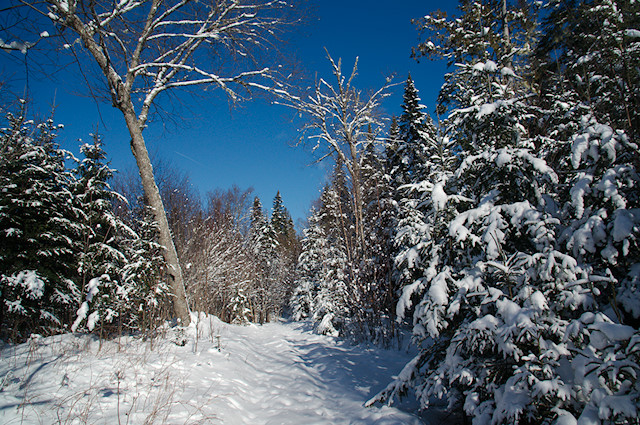
As I told Damien when I tromped in the door, smiling and warm in spite of the cold, it was "skiing without the angst". Skiing without the physical pain of learning a new skill and without the worry of anyone watching. It was freedom. On skis.
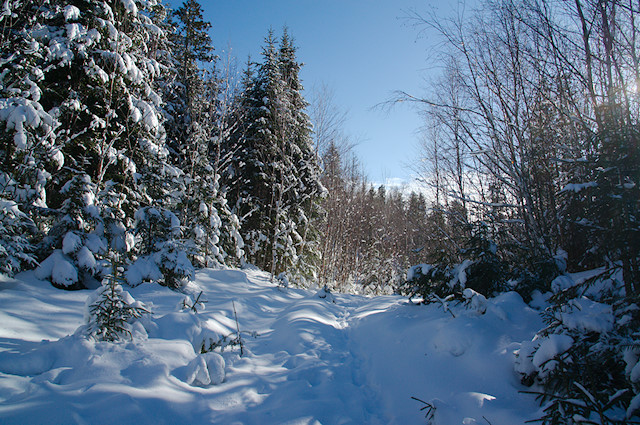
The next day the conditions had worsened. The snow was crusty and wind whipped. But my confidence stayed with me because the experience I had the day before. I knew I could do it.
So what if the conditions weren't perfect? The sun was shining and I felt strong and capable. It was a good feeling.
What do our children learn when we study?
Last winter I was writing a series called The Adventure of Learning. I was writing it as a learner, as a student myself studying both French and telemark skiing, and a bunch other things. (My French studies are on hold this season because of the intensity of our hike preparations).
This is the conclusion to that series. And it answers the question: what do our children learn when we study?
It's important for our kids to see us learning. For them to see us apply ourselves to study and to struggle through it.
I'll take it a step further and say, I think it's more important for them to see us applying ourselves to study and discipline, than it is for us to make them study and be disciplined.
I'm not saying we don't encourage our children to study and be disciplined but you can't "make" someone learn. You can inspire, teach, create the right conditions to encourage learning, but you can't "make" it happen.
Learning to telemark ski was really hard work. It felt vulnerable. It took courage.
That's what I want to teach my children about learning. That sometimes it's a struggle.
And then I want to teach them this also.
That when you push through the barrier, when your muscle memory takes you down the hill instead of sheer will, when your fingers remember the right keys, when the concept mentally "clicks" and all of a sudden "you get" long division or solving for x, when you've practiced "proving" enough words that you finally read them, whole, it is so worth it.
By that point though I don't have to teach them, because they know:
Learning is its own reward.
That's what our kids learn when we study. That's what they learn when they study.
Prizes, bribes, and even grades are not the reward for learning.
There is a place for grades, don't get all panicky on me. Grades are necessary in certain situations to assess knowledge. I want to know the professionals I trust have passed their exams to become doctors and car mechanics. But grades have taken on something completely different in a conveyer belt education system. They have become the reward. The knowledge, the skill, the thing being learned no longer matters, only making the grade matters.
Radical notion: an exam should be welcomed as a means to test knowledge, to test oneself, to assess your level of understanding of the material. The grade is not the reward, knowing what the test assessed is.
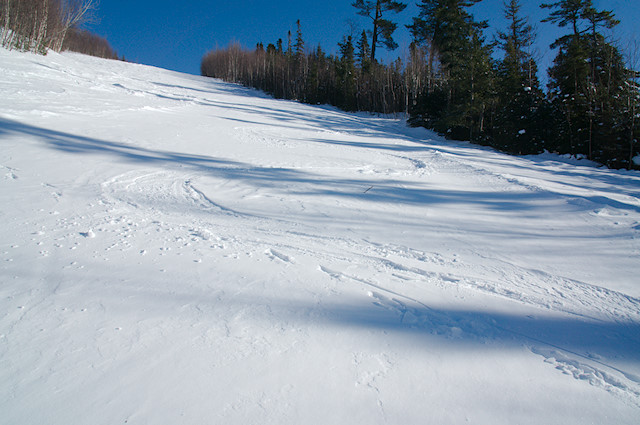
Celebrate the victories in your learning environment, but don't bribe your kids to learn, or study, because knowing the skill, having the knowledge, owning the strength and confidence that comes with that - skiing down the mountain on your own - is the reward. And if you shortcut that reward with false prizes you take away the joy of the real reward - which is learning itself.