A mama milkweed guarding her chrysalides
March 27, 2018
When the kids were little we studied Monarch butterflies.
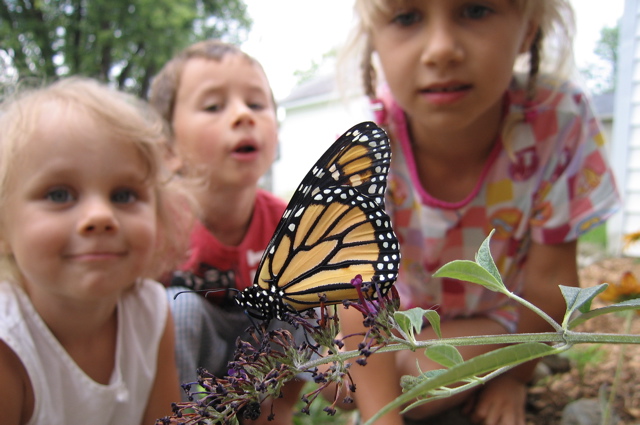
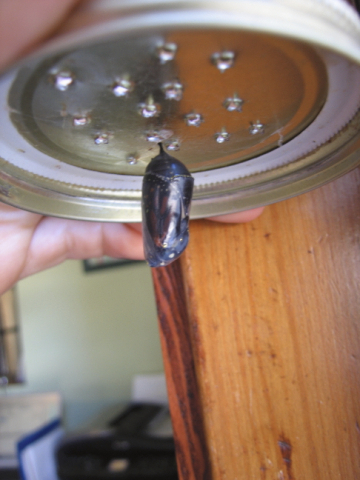
It was our late summer nature study ritual. Looking for caterpillars munching on milkweed plants, bringing them indoors, feeding them a steady supply of milkweed; being equally awed and grossed out by how big they grew (how much they pooped!), and watching them transform into a jeweled chrysalis (Monarch chrysalides are especially beautiful).
And then the eager anticipation while we waited the two weeks for the butterfly to emerge, observing the gold-specked solid green chrysalis transform into the papery thin clear membrane, the orange and black butterfly clearly visible beneath.
We watched this transformation often and marvelled every time in wonder. I wrote posts about our monarch studies 12, 11 and 10 years ago, explaining and photographing the process as a record of our homeschool activities.
I wrote those posts in August and September, butterfly season.
Fast forward to the present day late winter, not the season to study monarchs, but definitely chrysalis season.
Definition of Chrysalis
- a: a pupa of a butterfly; broadly : an insect pupa
b: the hardened outer protective layer of a pupa- a protecting covering : a sheltered state or stage of being or growth(emphasis mine)
I've always loved the chrysalis metaphor of "the protective covering during a stage of growth". It's given me a solid image, and a "nature of all things" understanding as I've been raising teenagers for the past six years.
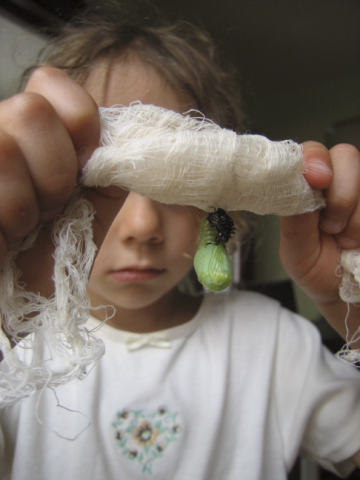
In order for a larva to become a butterfly, it creates a covering, a chrysalis, that provides structure and shelter while the caterpillar form remakes itself into the butterfly form.
What happens inside a pupa is both disturbing and amazing, like a sci-fi movie. For a caterpillar to become a butterfly it doesn't just "grow" wings, it has to digest itself from the inside out, breaking itself apart in order to re-form. And while doing so, it's completely stationary, unable to defend itself or run away from an attack.
I can't think of a more vulnerable state of being for a creature than the process of breaking down and rebuilding. Hanging stationary, waiting for the change.
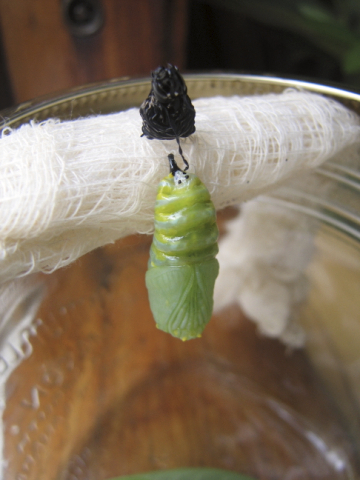
That digested mass inside a chrysalis is actually composed of individual cells, called imaginal cells. Imaginal cells are undifferentiated cells, which means they can become any type of cell. These cells are used to form the new body.
The story of the monarch is particularly compelling for so many reasons - they're a beautiful species, they have an epic migration, and they have a single food source - the milkweed plant.
Monarch eggs, teeny dots of translucence, are laid on the underside of the milkweed leaf, protected. As soon as the caterpillar emerges from the egg case it starts eating the milkweed. The white milky sap of the plant, responsible for the name "milk"weed, tastes terrible to many animals and is poisonous to some. It doesn't affect the monarch and so this terrible taste becomes a natural defense for the monarch. The caterpillar keeps eating, occasionally molting, shedding its exoskeleton to grow, until it reaches the pupal stage, when it attaches itself to either a milkweed plant or a nearby structure, to go through its metamorphosis.
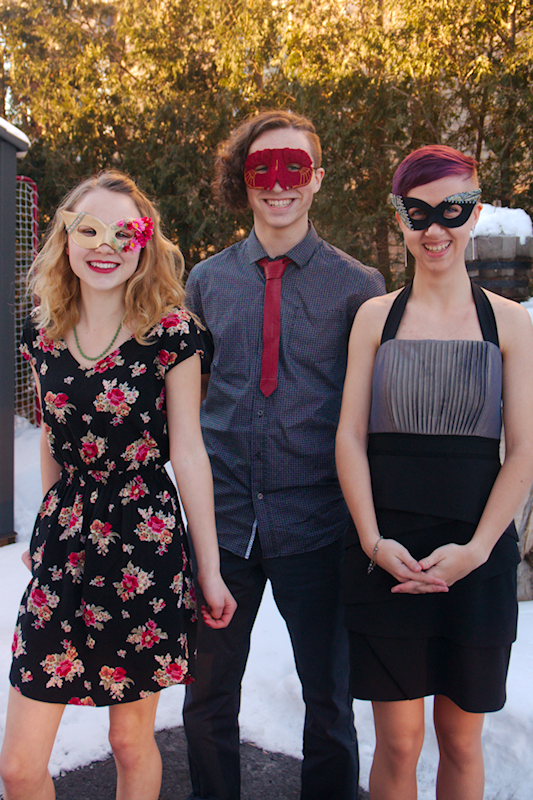
Celine will be nineteen in 2 months, Laurent just turned seventeen and baby Brienne is fifteen. We've been feeding caterpillars and sheltering pupa for a few years now.
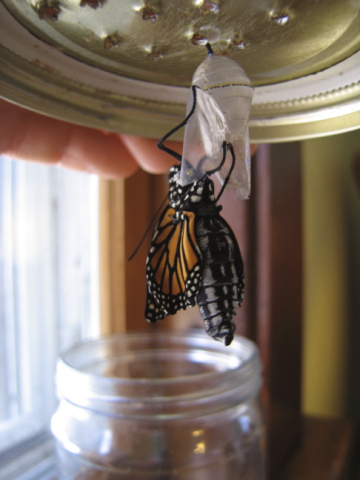
I often describe myself as a mama bear. Maybe I should say I'm a mama milkweed.
I nourish my children. I shelter them. I protect them during these vulnerable years of metamorphosis. I am the broad milkweed leaf, the strong stem. I provide a safe place for them to hold fast as they undo and remake themselves behind a hard-shelled chrysalis.
The monarch butterfly's life cycle varies according to weather and regional conditions. The creature exists in egg form for 5 to 10 days, the larva or caterpillar stage lasts 10 to 14 days, and the pupa/chrysalis another 10 to 14 days. That's a lot of variability for an animal with a lifespan measured in weeks, not years.
The job of a parent is to provide the right conditions for growth, but also to guard and protect the inherently variable (and vulnerable) timeline of development.
More explicitly, kids develop on their own timeline - physically, emotionally, spiritually, cognitively - and it's our job as parents to provide the protection and support needed for that process, perhaps most especially during the teen years.
Life is fragile at all stages but the chrysalis is helpless during the two-week-long pupal stage. It cannot move or defend itself. Its camouflage and finding a safe location are of prime importance in remaining undetected, undisturbed.
As parents, we're sheltering chrysalides. Like the milkweed plant, parents can provide the conditions that make their children feel safe to hold onto them during their most vulnerable time.
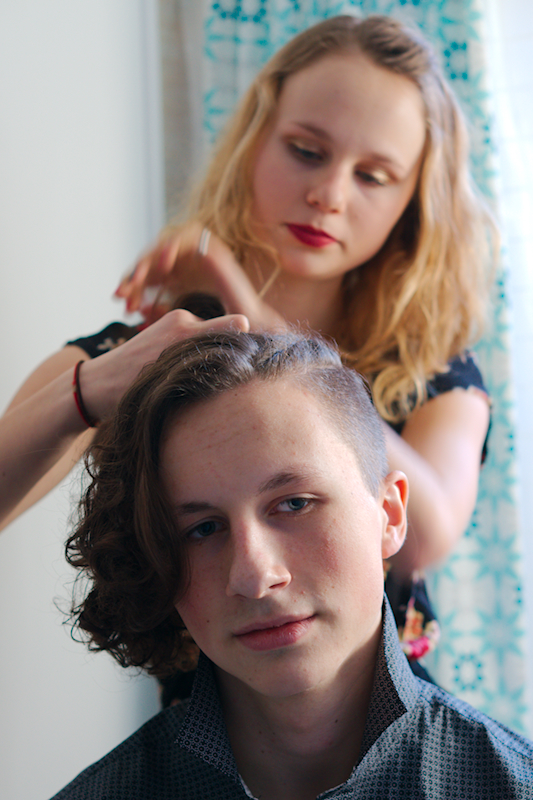
We establish ourselves in the caterpillar years as the best food source. What they eat from us both nourishes and protects them. And when our children need to un-make and rebuild, when they are about to turn to goo, they can attach themselves to us, shelter under a leaf, find a strong petiole or stem. And they know this will be a supportive environment that gives them the time and space for this transformation, according to their individual timeline.
A monarch chrysalis changes throughout the pupal stage. At first, you don't see anything but a shiny green shell, protecting lots of undifferentiated goop, imaginal cells. If you've watched this process, you know that slowly the color changes to a deathly black. You wouldn't be the first observer to panic that the pupa has died. Fear not, the chrysalis isn't dying, it's becoming what it's meant to be - an orange and black winged butterfly.
Through the transparent covering what you see is not decay but the wings being formed.
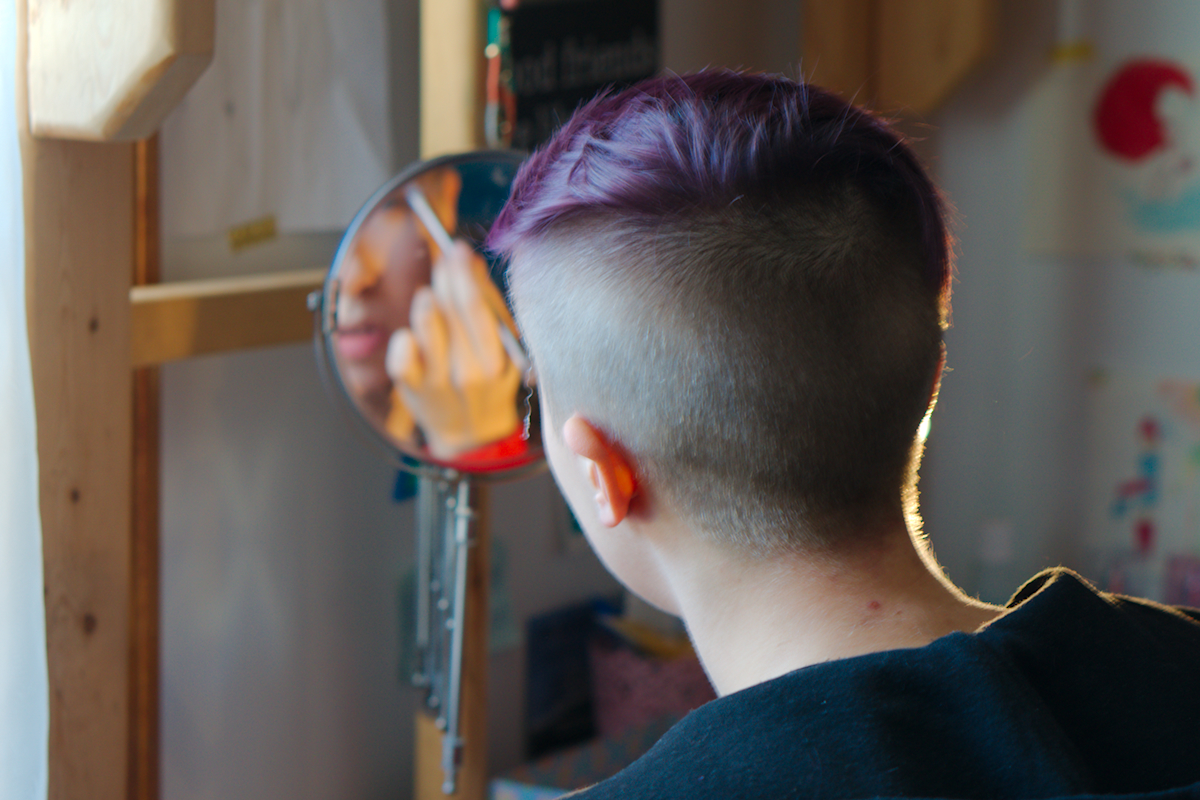
The chrysalis reality of raising teens and young adults explains, in part, my reticence to write on homeschooling through high school. This is a difficult stage to share because:
- I am protecting this process and guarding my children's privacy in their unmaking and remaking.
- It's gooey and "imaginal". The part I can describe is the papery thin membrane that simply covers and provides a framework for the real work going on inside. As translated to writing about homeschooling, it feels like listing the kids' courses and textbooks and projects and studies and schedules describe the shell but not the real thing going on inside. And I'm always more interested in the real stuff going on inside but because of point 1. I'm not going to talk much about that here.
- Parts of transformation are hidden, even from me (as they should be).
At the beginning of this transformation, this time called the teenage years, you don't see much. It's all green. Then what you see might scare you, especially if you don't know to expect the black. If no one told you it was coming.
But then, ah, you see that wing take shape, you see it forming perfectly in its own time and space and you start to breathe a little easier. But still, you wait, with anticipation for the shell to crack and that tender, rumpled winged, beautiful butterfly to emerge. And still you protect and give time because it's not going to fly right away, fluid from the body (the body nourished by your milkweed leaves) needs to fill those wings.
When that butterfly finally does fly, it happened all too fast.
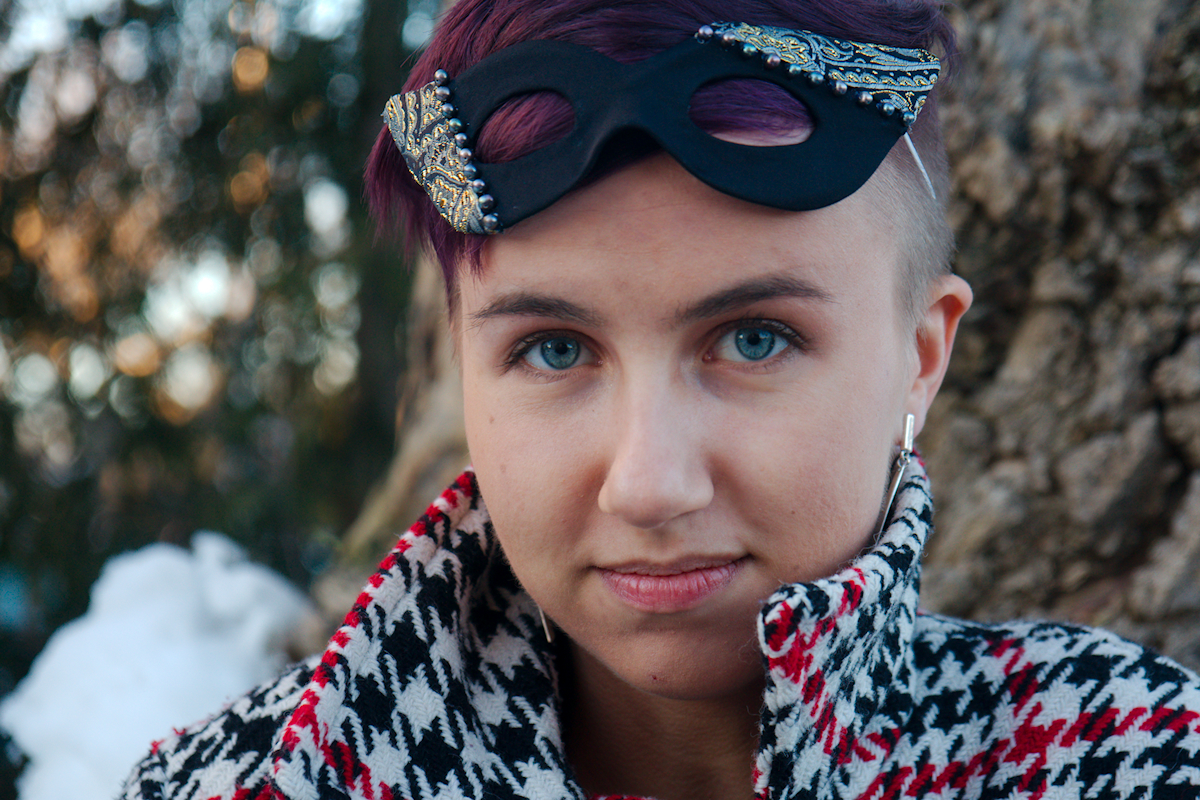
For a caterpillar to become a butterfly the pupa needs time and a safe space.
Am I providing a safe environment? Can my children be themselves in our home and our family? Am I providing relational safety for their goopy, undifferentiated, imaginal selves? Am I covering them, covering for them, as they digest childhood and re-form themselves?
I don't like prescriptive rules for parenting or homeschooling. But I am intentional about communicating (and living) the following messages to my teens.
You have time. I am sheltering you in love. I celebrate you. I am your advocate.
I'm not afraid of your developing body and identity.
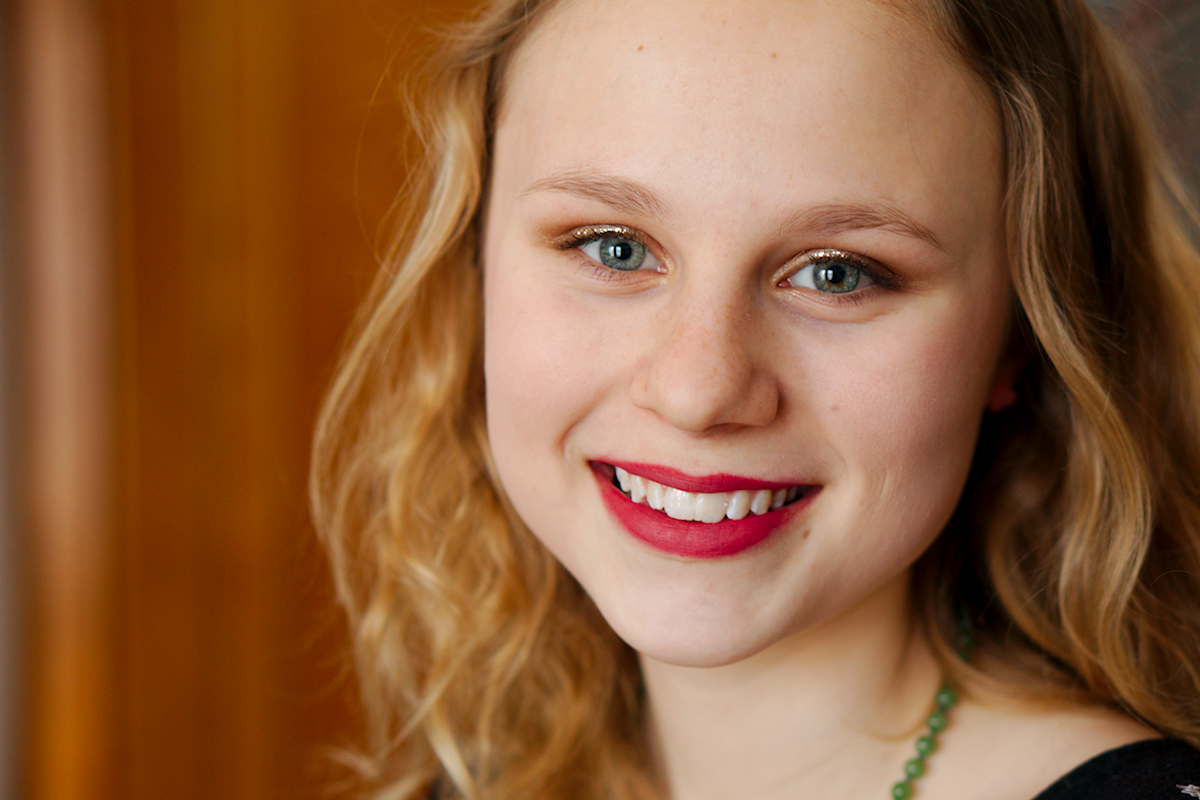
I will seek community and support for who you are. I will explore the possibilities and potential for your future and hold hope for things you don't even imagine. Hold fast, you might not see what's emerging, but I have a vision, and it's good.
You might feel a little messy inside, unattractive, but you are beautiful, like the jewel of a monarch chrysalis and you are becoming something beautiful. And we're going to shelter you through the process with our love.
You are safe here to become you.
Are you a parent of teens? Do you have any favorite metaphors for this season of family life and individual development? Any creeds or guiding principles for these pupal years?