Animal, Vegetable, Miracle - a review
April 16, 2008
I was so excited to finally get my hands on this fantastic story about one family's year long experiment in growing and raising most of their own food. I love reading about people who think differently, act differently and live differently than the norm.
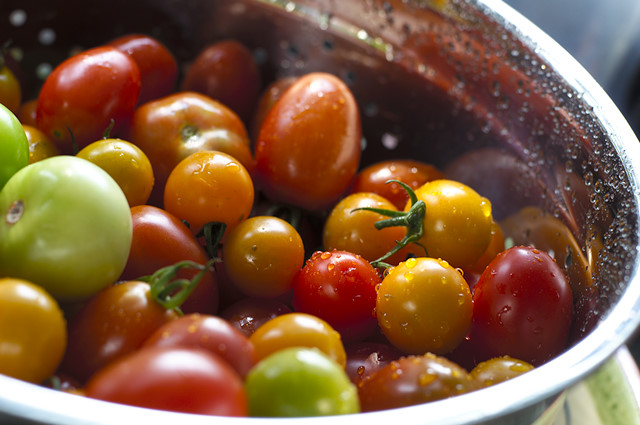
I think the grow your own experiment of this family is rather "out there" and inaccessible for most of the culture. I'm certain that's one reason I'm so attracted to it but also because it's a life lived with intention and deep conviction. In comparison to the Kingsolver-Hopp family gardening rigors I found our own family's efforts in supporting our local agriculture fairly piddly. This was a reality check since I can sometimes get on my high horse because I belong to a CSA, support local farms and visit the weekly summer farmer's market.
My basic criticisms of the book are two.
Firstly, Kingsolver spends a fair amount of time writing about being a working mother. How over the years she has managed to have a career and still can tomatoes. But from my farm and gardening experience I have a hard time believing that during the course of their grow-your-own year both she and her husband worked full time, yet she leaves readers with that impression. Or at the very least she doesn't exactly expound on her daily goings on except for what she's picking from the garden and special events celebrated with family and friends.
What I want to know is how do you raise animals, plant, weed, pick, can and preserve the garden, butcher the animals and cook a home cooked meal every night? All while parenting, cleaning house, doing laundry, running errands, ya-da, ya-da, ya-da AND working full time?? These questions are never answered. And yet growing at least some of your own food is presented as achievable for the average over-worked American family. I believe that unless the American family determines to spend less, drive less and work less, growing their own food (even a small portion) is largely unrealistic. But hopefully books like Animal, Vegetable, Miracle will be a part of the movement that changes our popular fast food, fast life culture. So that more families will choose to grow gardens and shop for local, in season food.
That brings me to the second criticism or perhaps observation. As a plant based eater (ie: we're mostly vegan) living in Northern New England if I chose to eat only locally grown foods I'd eat a lot of potatoes and go crazy with summer blueberries (not a bad thing).
Our family has chosen to base our diet on plants for improved immediate health and longevity, we want to be hiking with our grandkids. Eating a variety of foods from around the globe (at times) makes this possible. And for many, many people in northern latitudes the only way to achieve the health they want is to eat fruits and vegetables grown elsewhere. A bit of a conundrum if you believe in local sustainable agriculture - which I do. So, I'm thinking this one through. Trying to find out all the healthy foods which are grown here, how we can maximize our consumption of those and perhaps decrease the food we eat that is shipped from long distances.
Overall, the book was a fantastic read. Kingsolver is engaging, funny, convincing and just an all round excellent writer. The book is an eat your local veggies and meat mantra but the narrative of her family keeps it personal and interesting.
Related Posts: Interested in how our family grows some of our own food and chooses local whenever we can?