A Middle Years Curriculum (with Canadian studies focus)
September 16, 2013
What do I mean by middle years?
I refer to the middle years as the stage between late-elementary and beginning high school. Depending on the kid starting at 12 ending at 14/15. It's a transition stage from the relaxed elementary years to the scholarship focused high school years.
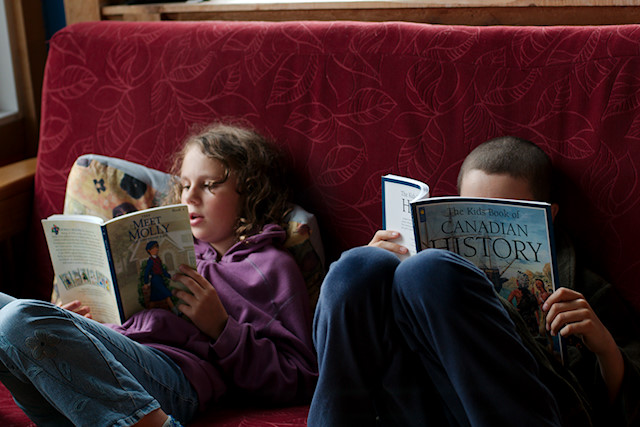
Brienne (almost 11) and Laurent (aged 12) are both at the beginning of this stage. Brienne tends to track with her brother's academic level, I basically treat them like they'r in the same "grade" since developmentally they are very close.
The overarching course of study for our "middlers" is a continuation of the late-elementary track I set out last year.
We're trying a few new things this year, based on our learners' needs and growth, and my own interests and inspiration as their primary teacher, facilitator, and mentor.
This post highlights those changes, see last year's post if you want to fill in the gaps.
We'll be following this curriculum - the one laid out below in conjunction with the pieces already in place from last year - until December. Come January we'll be all-hands-on-deck getting ready for the AT.
Design & Art
Fashion Studies
Our youngest has been bitten by the fashion bug. In reality, she's been interested in fashion and beauty for a long time (and all things pink & sparkly). As a little girl that interest was channeled into Barbies and Princesses.
As a growing girl, Brienne is anxious to take that further (can't keep her a little girl forever) and we've been scouring appropriate resources for her.
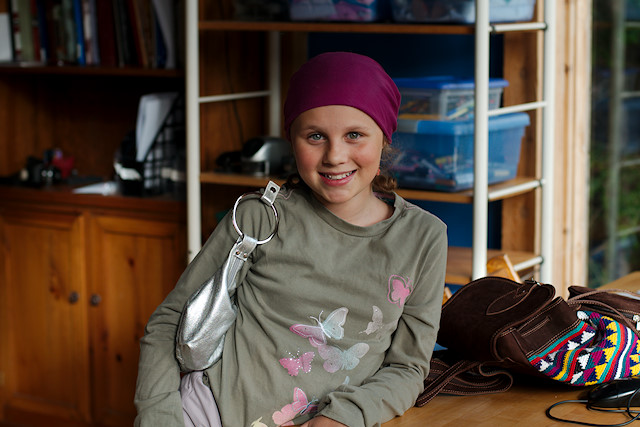
Brienne is frequently downloading fashion related apps but none have really stayed the course as excellent resources. But they sometimes fill the gap till we can find resources that are a better fit. Most apps we've found are too fluffy, essentially mindless consumer-mindset games, or too complex for her stage. We keep looking.
What I need to get her is a large stack of paper fashion magazines. She wants to do some old fashioned scrapbooking of her ideas. Mixing and matching to create new designs. Alas, I have zilch magazines. Help! Time to survey my community.
We use the internet a lot to support this interest, because in case you haven't noticed, I'm not exactly the best mentor for this interest.
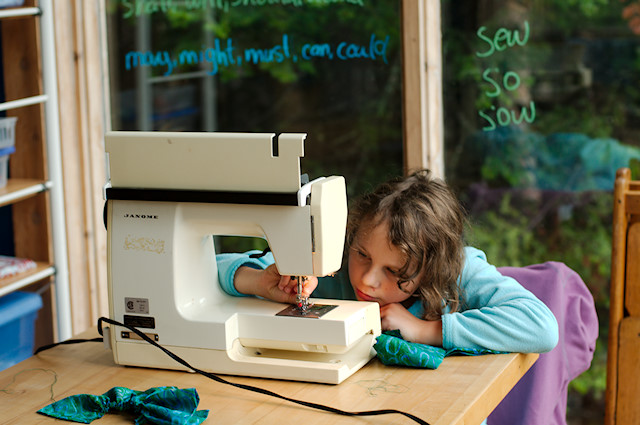
Brienne is diving into a fashion project this fall, and the sewing machine is humming. She's using online tutorials to teach her the sewing she needs (you seriously could probably learn any hands-on skill at YouTube.) I am the fabric store chauffeur. I need to arrange a visit and interview maybe with a local fashion designer. Yep, we have one of those!
Art
Laurent continues to draw and draw. And sell his art.
If you're looking for drawing tutorials check out Mark Crilley's YouTube channel. All our kids love his stuff and their skills have jumped significantly under his tutelage. Mark Crilley's voice is often heard in our home throughout the day, when the rock music isn't playing. We just ordered his book Mastering Manga.
Video Production
We'll be producing a video series while hiking next year. We'll be shooting the footage and another family team will be editing and publishing that for us, while we're on the trail.
I'd like to study some basic video and photography principles with the kids this fall in preparation for this. I'll be using this Vimeo page as a starting point.
Health & Wellness
Taekwondo
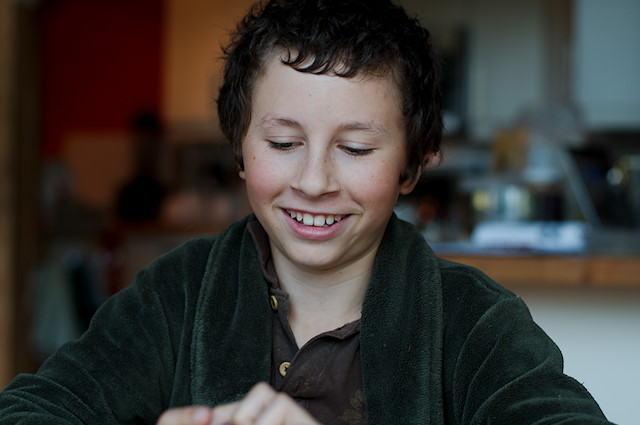
Laurent is pretty serious right now about studying Taekwondo. All the kids take Taekwondo classes together 2 nights a week, but Laurent studies it. And practices it. And emails his Master with questions. And makes a daily schedule that includes time for this study. "Time for my Taekwondo practice", he says.
Laurent uses YouTube videos, site recommendations from his Taekwondo Master, as well as weekly classes for his instruction. His favorite web resources are Taekwonwoo (the free stuff) and Ginger Ninga Trickster.
History, Geography & Cultural Studies
After we moved back to Canada two years ago, I knew I wanted to do a concentrated Canadian history and geography study at some point. That's what we're doing this fall.
Canadian study resources
We continue to learn history through living books and this is my line-up of possible read-alouds for this term:
- Eljiah of Buxton by Christopher Paul Curtison,
- Madeleine Takes Command by Ethel Brill
- With Wolfe in Canada by J H Henty - This is a public domain book and is free for Kindle from Amazon but also from Project Gutenberg (where I downloaded our copy).
- Canadian Summer by Hilda Van Stockum
- Evangeline by Henry Wadsworth Longfellow - Another public domain offering, downloaded from Project Gutenberg. This hits close to home for us, as parts of the Baie des Chaleurs, very close to where we live, was settled by Acadian deportees, who escaped through New Brunswick, the deportation across the Atlantic and into the southern United States.
- Incredible Journey by Sheila Burnford - I think we may have read this already but even so, it will be a good audio supplement.
- Farley Mowat books, a few I'm considering Lost in The Barrens, New Founde Land and Never Cry Wolf
- The Broken Blade by William Durbin
A few notes about these books selections:
- I supplied all Amazon.com links because most of my readership is in the US. I purchased my books through Amazon.ca and Abe Books. Kindle editions of books I purchase through Amazon.com since that's where we've purchased our Kindles (because there's more books available for Kindle at Amazon.com than Amazon.ca).
- We probably won't get around to reading all of these. And a few of these I'll present as audio books, available through our library membership with Free Library of Philadelphia (which is not free to non-residents but is still cheap and has an excellent selection of digital audio and ebook titles). This is simply the list I've curated to draw from.
- I haven't included books we've already read or eras of history or geography we've already studied, eg. the girls have already read the classic Anne of Green Gables so I haven't included it in this list. Also, having lived in NS for a short time we did a bit of Maritime history while there.
- I won't be doing too much with "settling the prairies" history as it's quite a similar story in Canada (just with more snow) to The Little House on the Prairie - books we read and re-read when the kids were quite a bit younger.
- Over the years my kids have all enjoyed A Pioneer Story which is a great Canadian history book about eastern Canadian pioneers complete with historical fiction, non-fiction history, craft and activity ideas. You could do a whole study around this book alone.
- I'm still looking for some western Canada, railroad building, and/or Klondike historical fiction to round out this selection. If anyone has a recommend, I'd love to hear it.
- Dear Canada is a diary series of Canadian history. We have a few of those kicking around.
- If you are looking for Canadian historical fiction I recommend getting a catalogue from The Learning House or Homeschool and More. These Canadian curriculum companies provide a much better list than any American curriculum companies I've come across. I used their catalogues to pull together our own reading list.
- I received great comments on this post with more resources suggestions. I encourage you to scroll through. This site of book recommendations was particularly worth mentioning
These books serve the purpose of simply inspiring further study and telling bits of Canada's story. They are not the be all, end all of Canadian historical fiction.
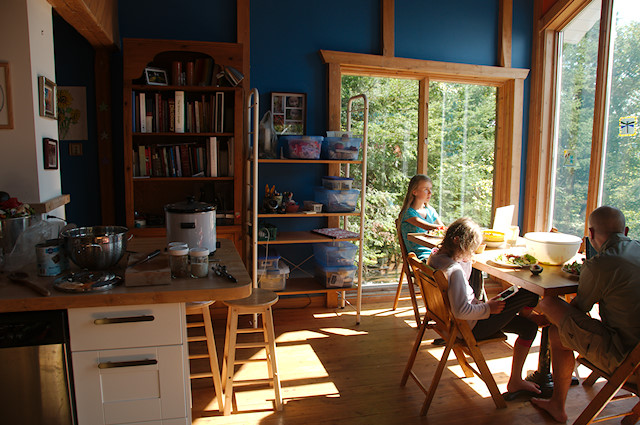
In addition to stories, we are using materials from Hands of a Child Canada Project Book available through CurrClick (see more about CurrClick at the bottom of this post).
This pdf is a complete lapbook making resource. I'm not using it for that purpose though. Instead I'm using it as a springboard of Canadian history, and also as a logical presentation of Canadian history that I can draw from to incorporate in my lessons with the kids.
For our Canadian mapwork (my kids enjoy labeling maps) we're using the masters from Canada Project Book and other resources on the web.
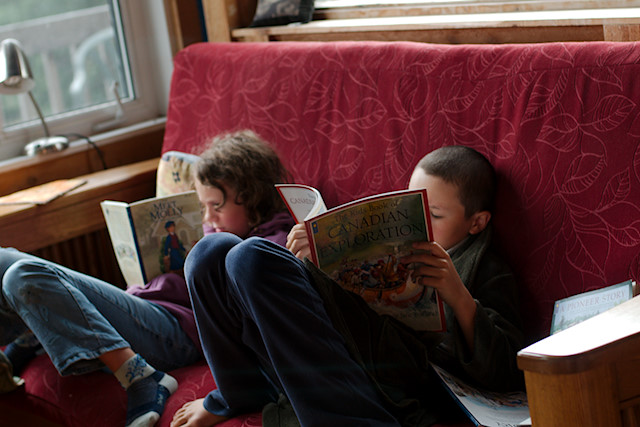
Last fall my mother-in-law gave our kids a couple books that we'll use as reference books. The Kids Book of Canadian History and The Kids Book of Canadian Exploration will provide background information and can be read by the kids according to their interests.
I've found if I pull these books out of our small at-home library and leave them on the couch the kids will just pick them up and read them without me having to teach anything at all. This is a strewing strategy.
Another significant resource for our Canadian studies is Canada: A People's History, a video series, originally broadcast on tv, now available on YouTube. These are not appropriate for younger children (Europeans meeting Natives is not always pretty) but are fine for approx. 11 years and older.
As always, if our kids tack a different direction in their interests or learning we will go down that track. These Canadian history resources will be the starting place and the returning place when other interests wane.
Math
The kids just finished the Teaching Textbooks level they were working on and we're now switching to Khan Academy for our math resource.
Reasons I'm using Khan exclusively for math
- It's completely free. I don't have a lot of homeschool funds to play with these days, every bit I save on resources allows me to buy the other books and supplies my kids need and want for their projects and studies.
- It's technology dependent. I want my kids to gain confidence in computer based, online programs for learning. Their future education opportunities may involve a great deal of online, distance learning (I'm thinking ahead here to college/university and life in general). I want them to be comfortable with the ever-evolving technology and platforms of online learning.
- Khan Academy has come along way since I first discovered it years ago. It so much easier now to track your student's progress and design a math program based on what your student already knows and still needs to learn. You design the course of study based on the learner. I love this.
- Khan doesn't work for little ones (yet) but now that my kids have completed early elementary math (we track a couple years behind grade level in our math) it can be a complete course of math study from arithmetic through to university math.
- Now that Laurent is a competent reader we don't need a heavy audio-visual math program like Teaching Textbooks.
Outdoors & Adventure
As we're getting ready for the AT next year I am always on the look out for outdoor, backpacking, and survival type teaching videos. Damien and I have read a ton of stuff about this subject but it's always nice when we can find other resources to help teach these principles to our kids.
Again YouTube to the rescue. But we are also accessing backpacking how-to videos (scored that one for free for review), and survival training, and other nature training from online experts and teachers. There is so much out there. You just got to start looking!
Reading
He reads. He reads!
This development alone opens up so many more doors in our learning adventures. I knew this day would come. (Ok, trusted this day would come). And now that it has I can both breathe a sigh of relief and pursue a lot more resources that are reading-dependent.
As always, I don't assign my kids reading. For example, history read-alouds aren't assigned, I might suggest to my kids to read something (or strew it about), but they can choose. The things I want them to read I will read myself to them or supply as an audio book.
That being said, my kids will often take me up on book suggestions because I try to choose books they will enjoy. But books and book summaries are not assigned (but I tease out book summaries all the time in different ways).
Reading Horizons
Laurent is still completing Reading Horizons, we go slow with most straight-from-the-box curriculum because we are often interrupted by our other interests.
In the case of Reading Horizons I choose to take it slow and steady instead of pushing it and there were also long breaks when we just let it sit while doing other life stuff. Laurent is on track to finish the basic program later this fall. So, all told, Laurent will have completed the program in a year in a half.
Reading has come slower to Brienne than it did Celine but she doesn't have any "brain wiring" reasons for that. She's just been slower at becoming a competent, independent reader.
American Girl Book Club
This fall I want to try something new with Brienne. CurrClick offers some free online clubs for homeschoolers and I found an American Girl club for Brienne to participate in.
We have all the American Girl books - a gift from another homeschooler years ago who had outgrown them. Brienne likes these stories and this club would give her a chance to meet other homeschoolers and talk about the books. I've never done this before so I have no idea how it works or if she'll like it. The first meeting is at the end of this month.
Science
I don't teach elementary science, you can about that here. But now that the kids are bit older and I have more energy for these things (I have more energy because the kids help more in the home, which translates to me having more time to assist their studies) I want to try a science study this fall in physics.
Physics
Why physics? Because it's the science subject that I am least familiar with and therefore the least likely I am to teach in an everyday learning context.
Last fall I purchased a whack of science resources that have sat largely unused. I thought I might pull together something from those.
However, I've decided instead to use an already put together resource from Cynthia Montgomery called Fizzyx for Fun, Exploring Physics through Experiment & Creative Play.
Why this particular resource? Because the author contacted me asking if I'd like a free copy. Free is a price I can afford. Also, this is exactly what I'm looking for, an easy experiment-based introduction to basic physics.
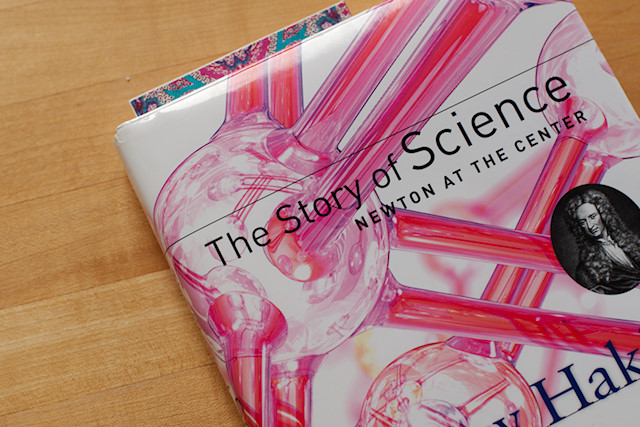
I hope to round this out a bit, sharing the story and context of Newton, by reading portions of The Story of Science: Newton at the Center. Hoping to actually use some of those science resources I purchased last year!
Writing
For writing instruction and practice, I continue to follow (with our own modifications) The Writer's Jungle approach, published by Brave Writer.
This fall I'm going to add Rip The Page as inspiration to our Freewrite sessions.
I'm roughly aiming for one writing project per month per child. Usually how I achieve this is simply by seeing where the kids are already writing and then building on that. Like with reading, I don't "assign" writing. I look to see where inspiration, need or interest is bubbling and teach writing around that.
Grammar Lessons
New to us this season are grammar lessons. Grammar has been nagging me personally for some time. I want to be a better writer but have some grammar "issues", shall we say.
Basically, I can't explain what good grammar is I just know that some sentences sound better than others. And I have basic understanding of verbs, nouns, adjectives and adverbs. I'd like to do better than this.
I've invited the children to join me on a grammar study. There would have been no point in doing this earlier with Laurent, since he was barely reading with fluency. One thing at a time. But now that the reading foundation is laid, we can build on that.
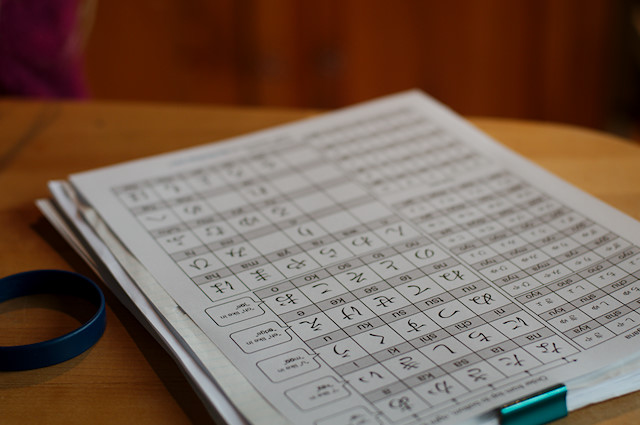
Celine is very interested in learning Japanese right now and spends most her study time engaged in that
Celine is interested in this also, as she would like to improve her writing skills to keep up with all the wordsmithing that goes on in her online world.
We are using Daily Grammar as our main resource. No, we don't do it everyday, and my strategy, as with any lessons, is to keep it short and sweet. I choose this resource because it is inexpensive and thorough. I like that it's a pdf, easily searchable by topic.
How I Use Ready-Made Teaching Resources
You'll notice there are a lot of resources in this list that could be used as lesson material to be plodded through step by step, adhering to the author or designer's way of looking at the subject matter.
If a progression like that works for us I'll follow it. If it doesn't work for us (because the material is boring, we organize or process information differently, or we get sidetracked by rabbit trails and personal interests) I won't follow it as presented.
I never feel trapped by a resource, thinking I have to follow it exactly as laid out. A few exceptions to this have been Reading Horizons lessons for Laurent. I don't know how to teach a dyslexic to read so I've followed their program almost to a T (but I don't feel trapped by this sequencing, I appreciate it). I imagine I'll follow the physics resource fairly closely also since I have virtually zero ideas about how to teach physics.
I like to gather a bunch of resources to use, resources to teach myself the knowledge or skills I want to pass onto my kids, and resources I can present to my kids, spreading the table with a feast of options and materials.
I encourage you to use resources similarly. Picking and choosing what's best for the learner, best for you (I refuse to subject myself to boredom and tedium in our homeschool), and best for your family (does this material line up with our family culture and worldview?)
My goal with following a particular resource is not to "get through" or even complete it. We use resources to support our learning, not strangle it. The resource is there to help us, not bind us into a pattern, systems or structures that aren't useful for us.
Is a resource or material not working for your learners? Here's a few ideas to try in that situation:
- Use the material to teach yourself and then springboard off that to teach the material to your kids in a way that works better for them.
- Go slower. Often resources don't work because you're rushing the process. You're so anxious to get "get through the material to check it off your list" that you forget what's really important here - your learners engaging with the material. My preference is slow and steady or short and sweet over "fast and furious, getter done" (I save that approach for housecleaning).
- Partner with your learner. Collaborate. Partner kids up together so they can help each other. This is especially important with younger children. They will often need you to participate with them.
- Take a complete break. Try again in a couple weeks or a couple months.
- Material still not working? Find something else.
CurrClick
I've seen CurrClick advertised before but I wasn't looking for anything at the time so I didn't give it much thought.
When I started looking for a Canadian study resource I landed at CurrClick and spent some time looking around. It's a pretty amazing site of homeschool resources, many of them free or inexpensive. Most products have a strong Christian worldview that may or may not reflect your family values.
CurrClick has a wealth of pdf teaching materials (lapbooks especially) and live classes.
For a review of CurrClick online classes see Kris Bales review on her blog.