Graduating from homeschooled high school
October 2, 2017
When we moved to Montreal two summers ago we joined our first homeschool co-op. Our kids were 12, 14, and 16.
When I write it out like that it's kind of crazy how long we homeschooled without the support of a group. It didn't feel crazy, it felt like our life, which was family-focused and self-directed. But we moved where we did, to the city, because our kids needed the support, friendship, and connection of a group. And as teens and young adults, with their particular interests and desires, they needed opportunities the city can provide.
Joining our homeschool group has changed the dynamic of how we homeschool, namely in that a certain schedule and routine is now imposed upon our weeks, from October through the end May, because of our involvement with the group. I've come to this experience late in the game of parenting school-aged children.
Most parents experience this shift at preschool or with the start of the school years. Homeschool families retain more personal and familial freedom, it's why we homeschool. But as our children become more involved in co-ops, sports, dance, theatre, church, etc. we give up some of our freedom to the direction and purpose of the group.
Damien and I have not been entirely comfortable with this loss of familial and personal freedom. We place a high value on self-direction. But it's that very value that motivated us to find support and community in the first place. Our children need this for their personal development, to pursue their interests and meet goals, academic and social. And we are committed to facilitating this, at the loss of some of our own freedom.
(This is not a boo-hoo, poor me story. I'm not whining, complaining or bemoaning this reality of raising children. I'm simply speaking the truth of it.)
This is one of the central tensions of parenting, marriage, and deep and loving relationships in general. We are always releasing our own desires (which may be very good) to support and love someone else. And all this has to happen in some kind of balance so that everyone's needs are being met to some degree.
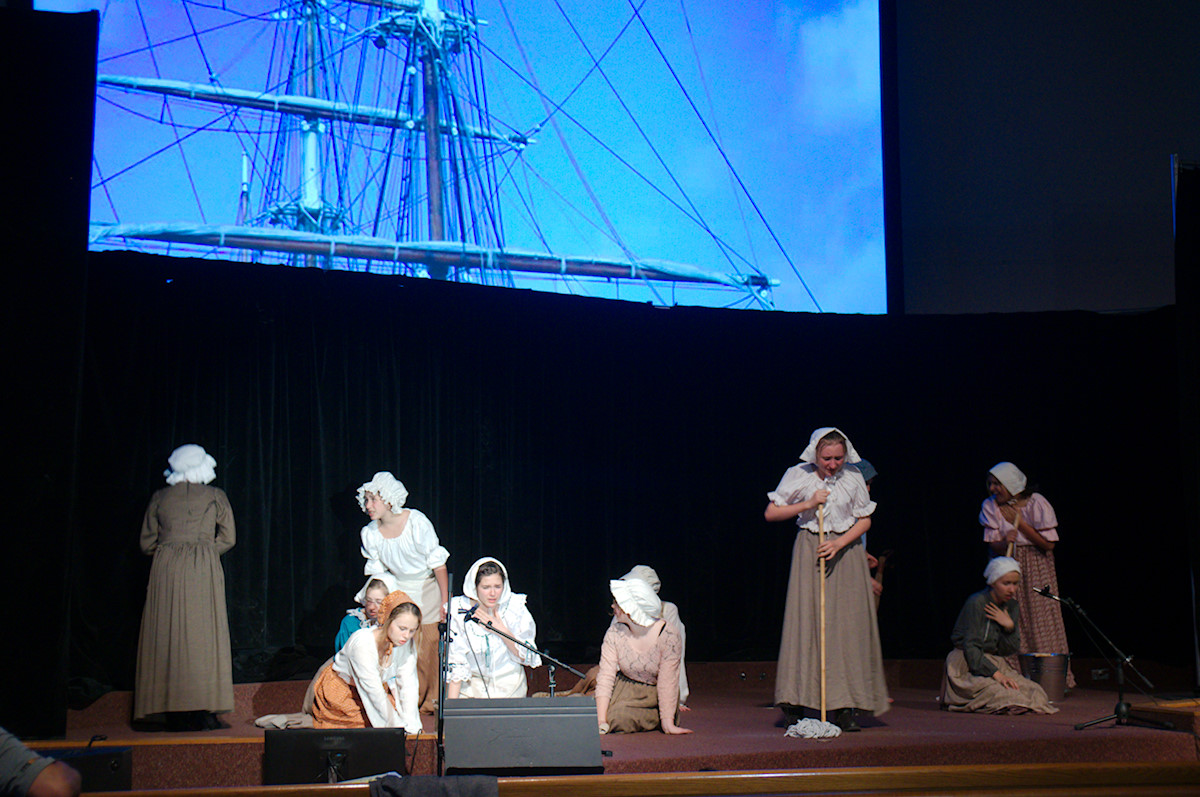
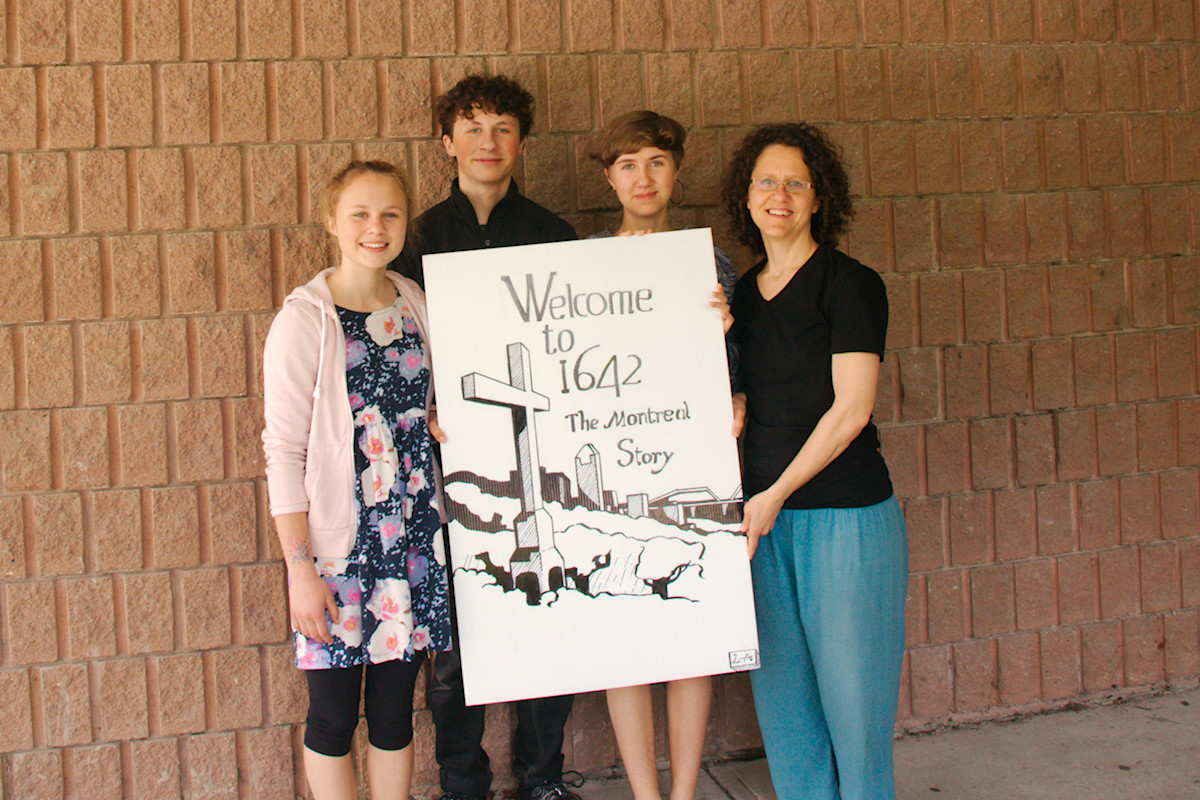
Our teenagers love their involvement in the group. It provides friendship and connection. It offers graded classes and opportunity to prove themselves (they like this), and the chance to do amazing group projects, such as the drama production.
Our homeschool group produces a play (of exceptional quality) every May. My first year with the group taught me what to expect, the play takes over our lives. Even so, this year's production hammered me.
I felt like I was diving under water for long stretches of time, coming up for breath, ragged and exhausted.
The show was amazing, but the whole thing was a whirlwind. A blur of activity. And when I came up for air at the end of May my oldest daughter had turned 18 and finished high school.
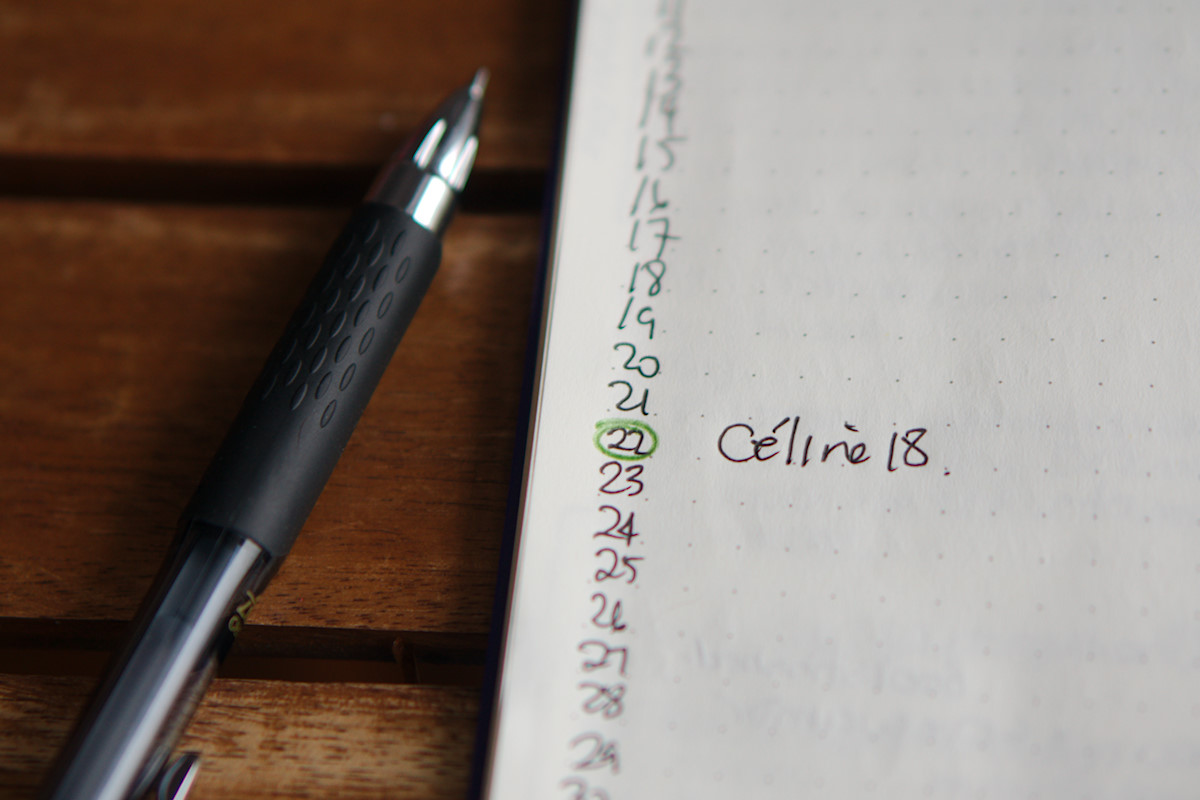
my bullet journal empty before the start of May
Just like that, we're done
These things don't "just" happen. They are years in the making. But when they do happen, the speed of the transition can be disorientating. One month we're in this place and the next we're not. It's done. Twelve years of formative schooling. Finished.
Celine's high school experience has been difficult for me to write about in part because of my desire to protect her privacy but also because it's been non-normative, even by homeschooler standards. It doesn't fit into any box and we've built it as we've gone, adjusting through each year and season according to what seems best for Celine in the context of our family life and with available resources. Each year looked different from the one before.
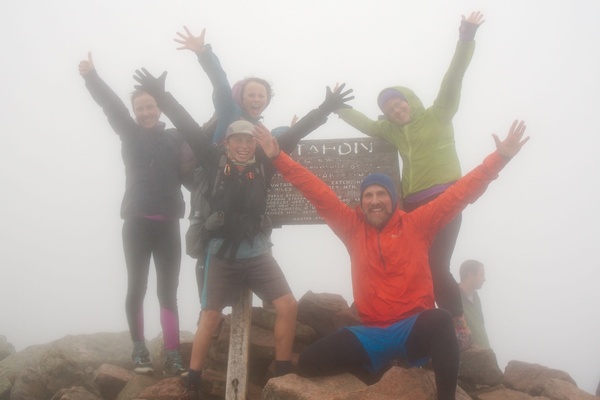
She's done large and small projects, taken online courses, and co-op classes. She's hiked the AT, had part-time jobs, participated in theatre productions, traveled a lot of North America, volunteered in various capacities. She's read a lot. Her transcript records a diverse education in Literature, Art & Design, Music, Physical Education, Canadian and World History, Earth Sciences, Physics, Computer Programming, Math and Personal Finance, and more. (I've been working on her transcript on and off for the last year and am finally buckling down to finish it this fall.)
Our first go-around at homeschooling through high school feels successful, though I have days, weeks, seasons, where I am plagued by doubt and worry, as are most homeschool parents from time to time. Perhaps the doubt is because I had been expecting something during high school that never did materialize.
My expectations vs. reality
I had expected that in her teen years Celine would have a sense of direction for her future. I said as much nine years ago when I was envisioning the high school years in our home. Nine years ago. Things aren't always as you expect they will be.
I remain committed as ever to self-directed education - my own and my children's. Sure, it doesn't look like everything I thought, but this is how we learn, by doing. My own learning is as much a part of the journey as my children "getting an education".
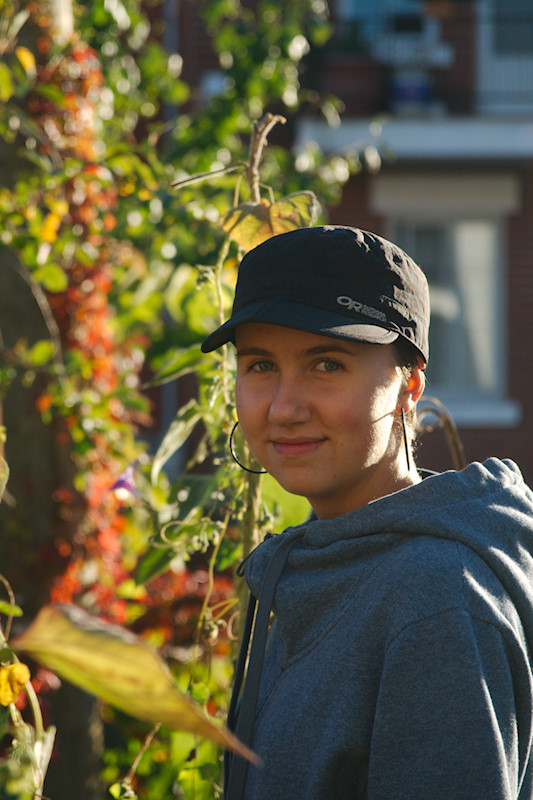
Celine never did settle on a plan for her immediate or distant future before finishing high school. I don't think she's unique in this regard. Some kids know what they want to study, do, and "be" after high school, they arrive at this from a place of self-knowledge and awareness or because they feel forced to make a choice.
I knew from the time I was about 15 years old what I wanted to do after high school. I didn't feel pressured, but I'm a planner by nature. And I like following systems.
Making a list of graduation requirements
Celine didn't have a plan and no clear intentions to pursue post-secondary studies. So when she was sixteen (the summer we moved to Montreal) I created a list of graduation requirements to help guide the last couple years of Celine's homeschooling.
I don't know who needed it more, me or her, probably me. I needed to know when I was done. I needed to have a structure for guiding us to the threshold of graduation. A clearly defined "this is when this stage ends and then next one starts".
We did not follow a school-at-home approach to high school, nor were we aiming for a particular post-secondary route. Our graduation requirements were a list of certain projects and experiences we wanted Celine to have; habits and disciplines for her to work on; required reading (of a certain scope and subject matter); and the acquisition of, what we determined to be, the fundamental math, history, science and technology, written communication, and civic skills necessary to function and participate in a 21st century Canadian context. Most of these requirements were already met by the time I drafted the Tougas Family High School Graduation Requirements (yep, I'm real creative with writing titles).
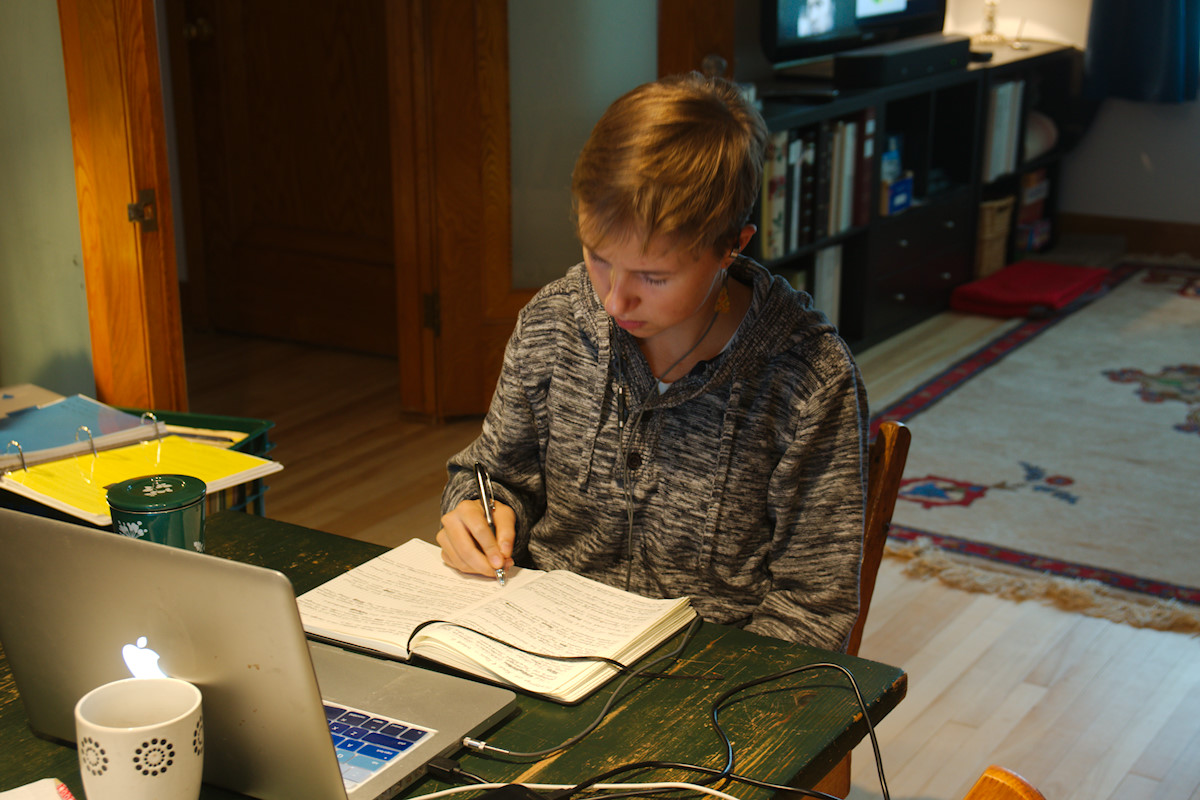
Celine spent her last two years of high school pursuing her own interests and meeting these graduation requirements in co-op classes and personal studies.
(Already the picture is different for Laurent, who at 16 does have a goal for post-secondary studies and possible career trajectory, and his last two years of high school are about preparing for that.)
The completion of these requirements and the transcript I'm drafting of all her high school experience and education do not grant Celine an accredited diploma and they aren't necessarily inline with the provincial graduation requirements. But she can use this transcript, and accompanying documentation, to apply to university, if and when she wants to.
Let's briefly talk about high school diplomas
How you obtain an accredited high school diploma as a homeschooler depends on the where you live. You may have in-state/in-province options available or you might use distance learning services. This post isn't about that process, though someday I might write that up since I have researched it a fair bit.
However, before you answer how, you need to assess why you should get a high school diploma. An accredited high school diploma may or may not be necessary for your student's goals and the education and work they intend to pursue as an adult. It depends on the person.
Parents need to take an honest look at who your child is - their interests, strengths, aptitudes. If you ascertain that not getting a diploma (adult ed equivalency or an accredited school) will hold your child back from the best employment opportunities available to them, then you should pursue a diploma route.
For example, in Quebec, certain post-secondary training schools require a high school diploma. If one of our kids wants that type of job training they will need a diploma. If your child will work at jobs with a high school level education requirement, you need to make sure they can prove this proficiency. And a piece of paper may be the best route.
For kids interested in self-employment and entrepreneurship it's up to them to make their work happen. They have nothing to prove except to the people who are buying their goods and services.

It really comes down to this.
To pursue post-high school education and employment (you know, build an adult life!) your student will have to prove their capabilities. What is needed for proof will depend on the path they take. We want to graduate our kids from homeschooled high school with the proof they need for their particular journey.
For some parents and students having a diploma (adult ed equivalency or from an accredited school) feels like an "insurance" document if you will. Usually if families go this route the student needs a diploma for the next stage, but even if they may not need it immediately, they know they have it for the future.
For other students a diploma is unnecessary for the post-secondary education track they are pursuing. Still other students and parents feel confident they can meet the challenges (and provide proof of competency) without this piece of paper because of their particular skill set, interests, and strengths.
You don't need an accredited high school diploma to get into university. You need a transcript of your education, as well as the other elements required for your particular program of choice or situation.
What now?
To proceed to university Celine might need a couple more graded courses. I'm not entirely sure. It really depends on what she would study. She doesn't have what she needs to get into Engineering for example, but she doesn't want to study engineering so that's no loss. She can take whatever classes/courses might be needed to beef up her transcript for university entrance. We'll cross that bridge when, and if, she comes to it.
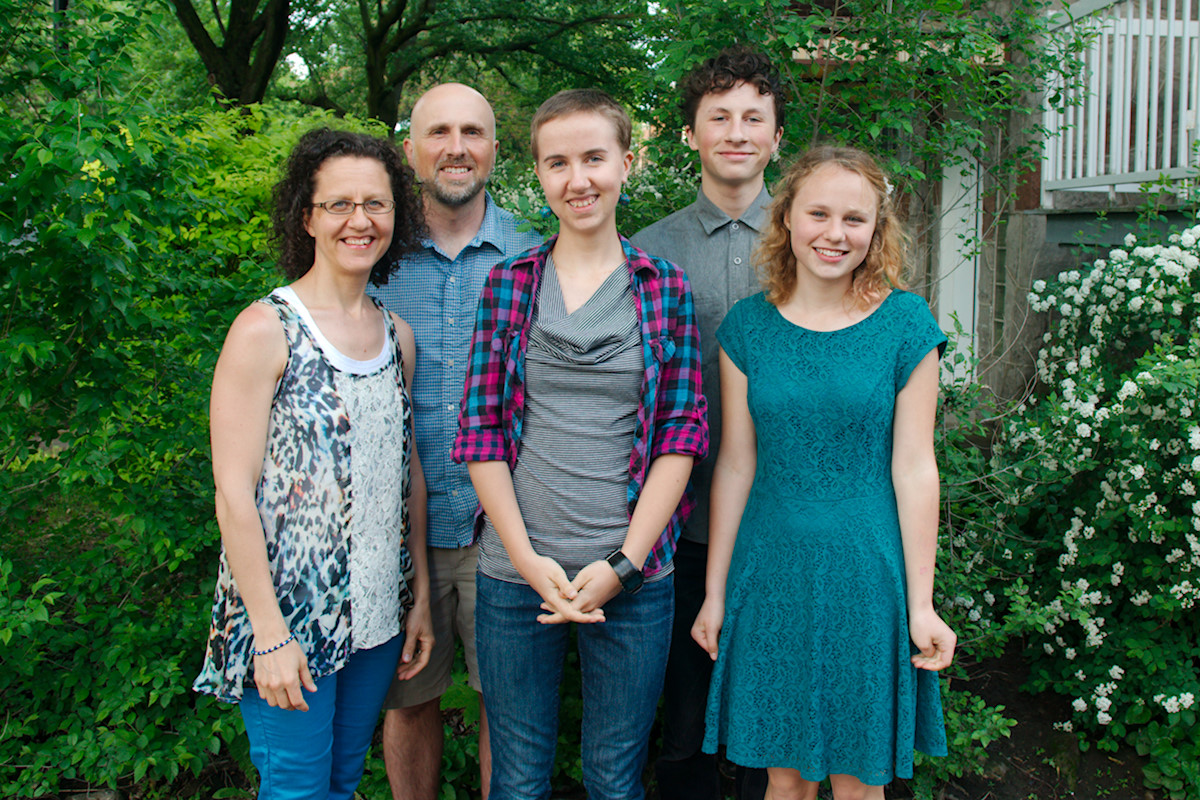
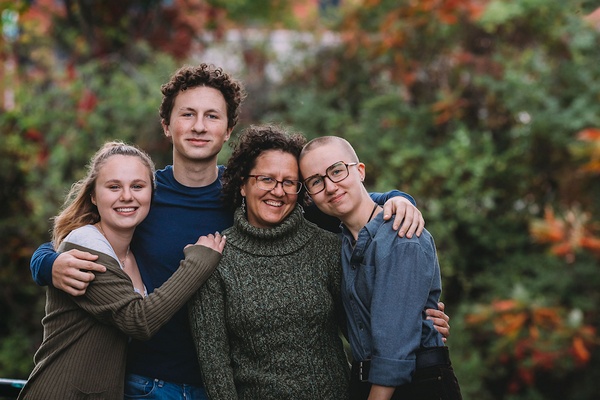
family grad photo
Celine has a technical and science/math-minded intelligence and aptitude. These things come naturally to her. She's the student that high school guidance counsellors and teachers would be directing to STEM studies. She's considered these options but nothing has captured her imagination in the way necessary for her to feel confortable committing to a course of study in those subjects.
Damien and I are confident she is capable of whatever she chooses to do. She has the knowledge, skills, attitude and experience to do challenging things. And she has our support. It's the choosing that has been the problem.
During Celine's last year of homeschooling I felt like I was waiting for something. Waiting for her to make some kind of decision. Waiting for a clear path.
But we know our daughter, we know her strengths and her weaknesses. We have a pretty good read of her personality type and how she moves in the world. ("INTPs remain so open to new information that they often never commit to a decision at all.") We know her tendency to analysis-paralysis, her fear of committing to a path or even a plan. This has been one of my chief points of tension with my otherwise very easy going daughter. I want to know the plan. She's hesitant to commit to a plan.
If we kept waiting for Celine to make a move, we could be waiting for a while.
So we helped Celine make a move. We talked about post-high school options with the clear mandate that forward momentum is the only "mandatory" requirement. It doesn't have to be "the" life plan. She doesn't have to commit to this for the next 4 or 2 years. She just needs to be working towards a goal, knowing full well that we are here to back her up and support her.
Seeing that Celine wasn't going to make a jump or movement on her own we helped her along.
The week after homeschool co-op ended in May she started working with Damien.
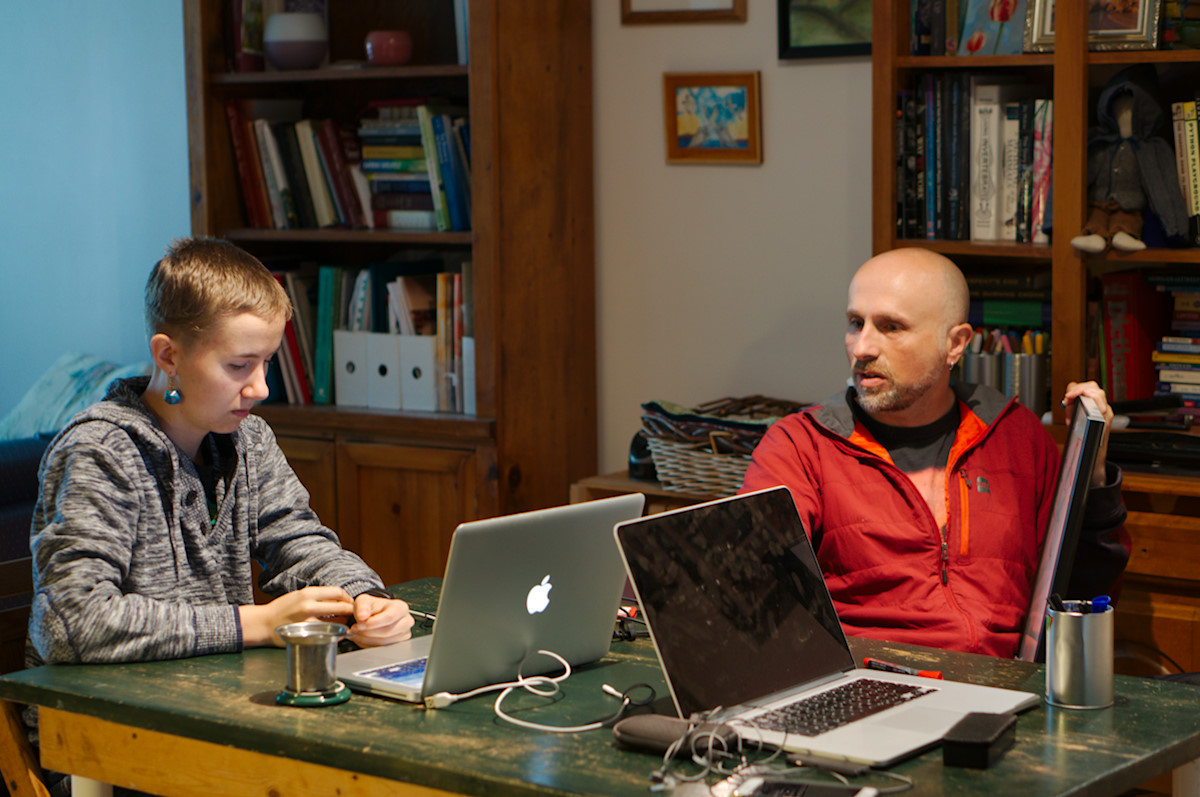
Employment
The transition went something like this, "Seeing as you don't have plans... and you've got these computer skills and aptitude... and an interest in design... next week you'll start working with me and my clients, taking on projects that are at your level, or just above your level, and I'll mentor you in learning what you need to do the work."
She accepted the proposal and has been working through the summer and is working this fall. Her first goal in this work is to pay off her new computer (which she needs to do the work), which she had to upgrade from the refurbished model we bought for her when she was thirteen.
We're taking it 6 months at a time. Setting goals, working, re-evaluating. Should we continue on this track? What needs to change? What have you learned in the process? What do you like most about this work? Is that something you'd like to study?
Celine is currently using and adding to her high school training and experience in Python, HTML, Java Script, CSS, Django and Sass to build websites and other small development and design projects. And Damien is providing the contacts and clients and teaching the skills and knowledge she lacks, which mostly involves pointing the way into existing documentation and suggesting ideas to research, implement and test. It's more project based learning.
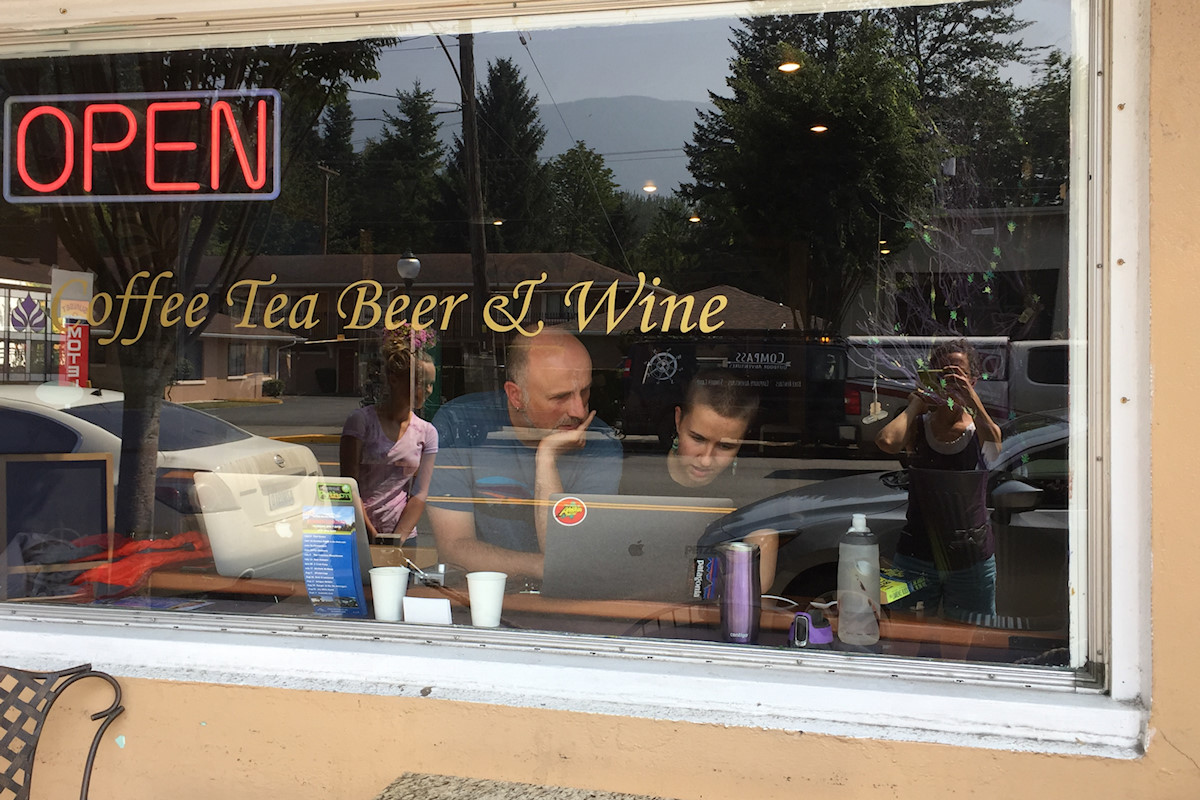
working on our summer roadtrip
She's also learning to be self-employed, which covers everything from financial and time management to people and communication skills.
We don't consider this a "gap" year. You're not in-between something unless you have some idea of what's on the other side, which we don't. This is what Celine is doing until she decides to do something else.
And the projects, or parts of projects that energize and stimulate Celine, as well as her challenges and frustrations, give clues and indications of what she may want to pursue more, either in future work or study.
I might have been expecting something else but it's funny how consistent this is with the rest of our homeschool journey. The goals we were aiming for were not university entrance or following a specific high school course of study. In fact, I published our graduation goals, eight years ago, and they expressly communicate having a foundation for whatever comes next, not having figured out whatever comes next.
I'm not waiting anymore. My uncertainty about Celine's next step was one of the things I needed to release this year. It's good practice for all the ways in which I will release my children in the coming years and for the rest of my life.
Celine is done high school. She's working. And we're learning how to parent, and continue to develop a friendship, with a young adult child who is finding her way in the world. We're figuring it out, all of us. And there's no rush. I had been feeling the pressure before she finished, the pressure and uncertainty of "what's next".
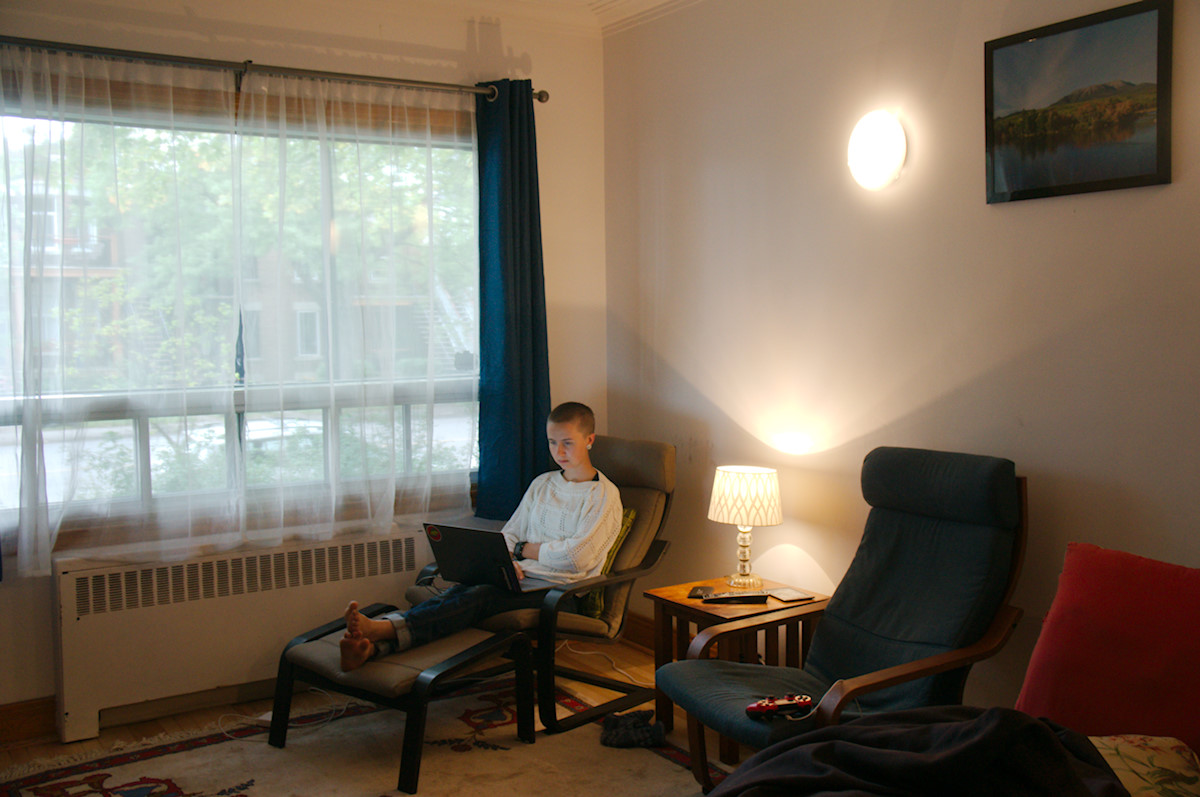
What's next is this. Living together as a family, working, paying attention to the clues, looking for signposts in ourselves and the opportunities that come our way, pointing to the next step. And enjoying what is, right now.
Because yes, life is a journey of forward momentum, goal setting and movement, but it's lived in the present moment. Life requires us to plan for the future and learn from the past, but ultimately, it asks us to live in this moment; present to every joy, discomfort, opportunity and change that defines a breath, an hour, a day, a week, a season, a lifetime.